

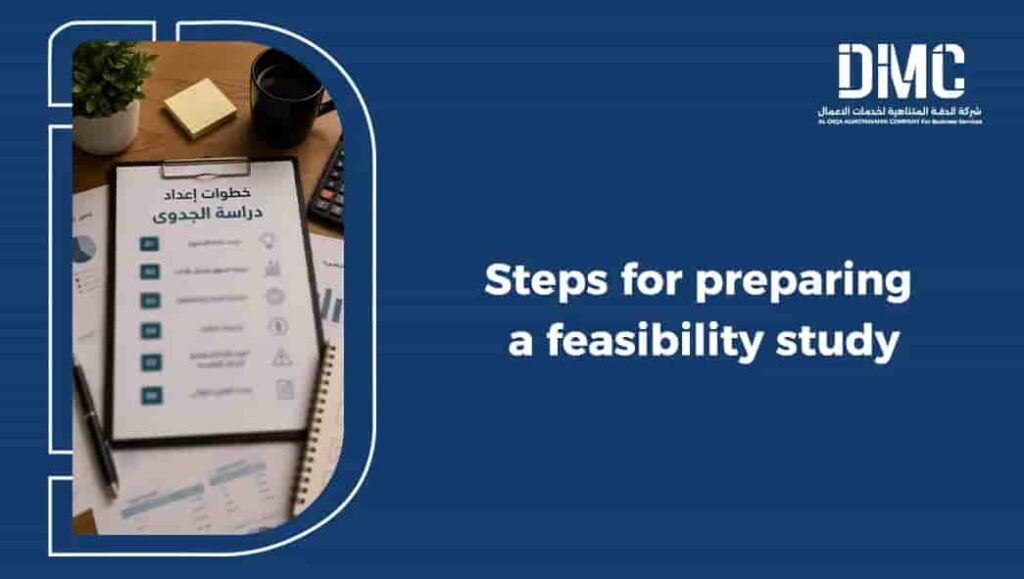
Preparing a feasibility study is the real compass that defines the direction of your project before investing capital, resources, and time.
Its importance is not limited to convincing investors. It also gives you a clear, data-driven vision of how realistic your idea is and whether it can survive in a competitive digital or traditional market.
In this article, we review the systematic steps for preparing a feasibility study and turning your idea into a measurable and achievable project.
What Is a Feasibility Study?
A feasibility study is a scientific and objective assessment of the potential success of a proposed project by analyzing its marketing, technical, financial, and operational aspects.
The study aims to identify potential obstacles, determine the required resources, and assess whether the project can generate a rewarding return on investment.
The Difference Between a Business Idea and a Feasibility Study
Many people confuse having a business idea with conducting a feasibility study, but there is a major difference between the two in the business world.
Business Idea
A business idea is the first spark or initial concept for offering a specific product or service. It is usually driven by enthusiasm, but it often remains a theoretical assumption without accurate figures or reliable data.
Feasibility Study
A feasibility study is the scientific, practical, and methodological tool that tests that idea. It filters the concept, analyzes the market, calculates expected costs and profits, and identifies risks to determine whether the project is achievable in real life or may lead to financial losses.
A feasibility study answers one key question: Can we implement this idea, and is it profitable?
The idea is the dream, while the feasibility study is the realistic roadmap that tells you whether this dream is safe and achievable.
Why Is Preparing a Feasibility Study Important Before Investing?
Preparing a feasibility study is a proactive and essential step in your business journey. It helps reduce risks before making the final investment decision.
Reducing Risks
It helps identify potential obstacles and challenges early, allowing you to avoid financial losses before injecting capital into the project.
Evaluating Opportunities
It allows you to measure the real feasibility of the idea and determine whether it has a genuine chance of success and continuity in the market.
Attracting Investors
A reliable feasibility study based on realistic numbers is a key factor in convincing banks, funding entities, and investors to finance your project.
Estimating Capital Requirements
It helps accurately calculate startup and operating costs and determine the required cash flow to avoid financial difficulties.
Improving Decision-Making
It provides accurate and objective data that supports strategic and operational decisions with greater confidence.
When Do You Need to Prepare a Feasibility Study?
A feasibility study is essential at several critical stages in your business journey.
Launching a New Business
When starting a new business idea or startup for the first time, a feasibility study helps confirm that there is real demand for the product or service.
Expanding an Existing Business
It is needed when adding new production lines, offering additional services, or opening new branches.
Entering New Markets
When moving your products or services into new geographic areas with different competitors and customer behavior, a feasibility study becomes essential.
Seeking Funding or Investors
Banks, financing institutions, and angel investors usually require a detailed feasibility study based on realistic figures to assess risk and expected return on investment.
Making a Major Strategic Change
A feasibility study is important when making a major shift in the business model, such as moving from a traditional business model to full e-commerce.
Steps for Preparing a Feasibility Study in Detail
Preparing a successful and reliable feasibility study requires a scientific methodology that goes through several sequential stages to cover all operational and financial aspects.
1. Define the Project Idea and Objectives
This stage is the real starting point for shaping the initial concept and clearly defining the identity of the project.
Nature of the Business
Determine whether the project is service-based, commercial, industrial, or technology-driven.
Value Proposition
Clarify the competitive advantage and the solutions your project provides to solve customer problems.
Target Audience
Define the profile of the final customer who will buy the product or service.
2. Collect Initial Information and Data
Accurate studies depend on reliable sources to reduce assumptions and guesswork.
Market Data
This includes official statistics and reports related to the target sector.
Competitor Data
Study competitors’ market shares, business models, strengths, and weaknesses.
Economic Data
Review inflation rates, exchange rates, and general economic growth indicators.
3. Conduct Market Research and Competitor Analysis
This stage evaluates the competitive environment and identifies growth opportunities.
Market Size
Estimate the total monetary value of sales in the target sector.
Supply and Demand
Analyze the gap between market needs and the companies currently serving those needs.
Competitor Analysis
Study the strengths and weaknesses of existing businesses in the market.
Market Gaps
Identify underserved needs that your project can take advantage of.
4. Prepare the Technical Study
The technical study defines the physical and human requirements needed to implement the project.
Location
Identify the required space, engineering specifications, or infrastructure.
Equipment
Determine the machines, devices, and software required for operation.
Technology
Define the technologies used in production or service delivery.
Human Resources
Set the administrative and operational structure and determine the number of required employees.
5. Determine Investment and Operating Costs
This stage provides a clear picture of the amount of cash required to launch and operate the project.
Startup Costs
These are expenses paid before actual operations begin.
Operating Expenses
These include monthly costs required to keep the business running, such as salaries, rent, and utilities.
Fixed and Variable Costs
Separate expenses that change according to production volume from fixed costs that remain stable.
6. Estimate Expected Revenues
Revenue estimation depends on sales and pricing models based on market data.
Sales Volume
Estimate the number of units expected to be sold during different financial periods.
Pricing
Define the pricing strategy, whether based on competition, cost, or perceived value.
Financial Scenarios
Prepare optimistic, realistic, and pessimistic revenue projections.
7. Analyze Financial Feasibility
This is the decisive stage that measures the profitability of the project and its ability to continue.
Break-Even Point
Determine the sales volume at which revenues equal expenses.
Cash Flow
Analyze the movement of money in and out of the business to avoid liquidity problems.
Profitability
Evaluate net profit, return on investment, and payback period.
8. Assess Risks and Make the Final Decision
This stage focuses on preparing alternative plans and anticipating potential crises.
Operational Risks
These may include equipment breakdowns or shortages of raw materials.
Financial Risks
These may include unstable sales, delayed collections, or unexpected cost increases.
Final Recommendation
The study should conclude with a clear decision: proceed with the project, modify the idea, or stop the project.
Key Indicators That Prove the Success of a Feasibility Study
There are several quantitative indicators that reassure investors and business owners about the economic efficiency and feasibility of the project.
Break-Even Point
This is the stage where total revenues equal total costs, meaning there is neither profit nor loss. Once the project exceeds this point, real profits begin to flow.
Payback Period
This refers to the time required for the project to recover the initial investment. The shorter the payback period, the lower the investment risk.
Net Present Value (NPV)
NPV measures the present value of all future cash flows after deducting the initial investment cost. If the value is positive, the project is profitable and adds economic value.
Internal Rate of Return (IRR)
IRR is the expected annual profitability rate generated by the invested capital over the life of the project. The higher this rate is compared to the cost of capital, the more attractive and feasible the investment becomes.
Common Mistakes When Preparing a Feasibility Study
Entrepreneurs may fall into several mistakes that lead to inaccurate results and poor project evaluation.
Relying on Overly Optimistic Forecasts
Some studies are built on ideal and unrealistic assumptions about sales and revenues while ignoring real market conditions.
Ignoring Competitor Analysis
Underestimating existing competitors or failing to analyze their strengths and weaknesses accurately can lead to misleading conclusions.
Inaccurate Cost Estimation
Failing to include all startup and operating expenses may cause cash shortages and sudden financial difficulties.
Copying Ready-Made Studies
Using previous studies that do not match the nature, location, and idea of your current project can produce inaccurate indicators.
Ignoring Potential Risks
Not preparing contingency plans or analyzing economic and operational risks may threaten business continuity.
How Does DMC Help You Prepare a Feasibility Study?
At DMC, we help you turn your ideas into realistic business opportunities through integrated services that include:
Market Research
We provide accurate analysis of opportunities, demand, and competitors to ensure that your project fills a real market gap.
Financial Analysis
We build precise models to estimate costs and revenues with high accuracy.
Investment Models
We design a financial structure that clearly shows return on investment and payback period.
Risk Assessment
We anticipate challenges and prepare contingency plans to avoid financial or operational failure.
Professional Reports
We deliver a complete and reliable feasibility study that strengthens your position before investors and financing entities.
Do not leave your project’s success to chance. At DMC, we combine deep expertise with systematic analysis to provide you with a clear roadmap that reduces risks and puts your project on the path to success.
Whether you are in the startup or expansion stage, our team is ready to turn your ambitions into realistic numbers and measurable results. Contact us now for a free consultation and start preparing a feasibility study for your project.
Frequently Asked Questions
Can I Prepare a Feasibility Study Myself?
Yes, for small projects, you can use ready-made templates and basic research. However, for medium and large projects, it is better to work with experts and consultants to ensure accurate numbers and reduce risks.
How Long Does a Feasibility Study Take?
The duration depends on the size and complexity of the project. It may range from a few weeks to several months to collect and analyze data accurately.
What Is the Difference Between a Feasibility Study and a Business Plan?
A feasibility study comes first to answer whether the idea is profitable and achievable. A business plan comes later to explain how the project will be implemented and managed in practice.
